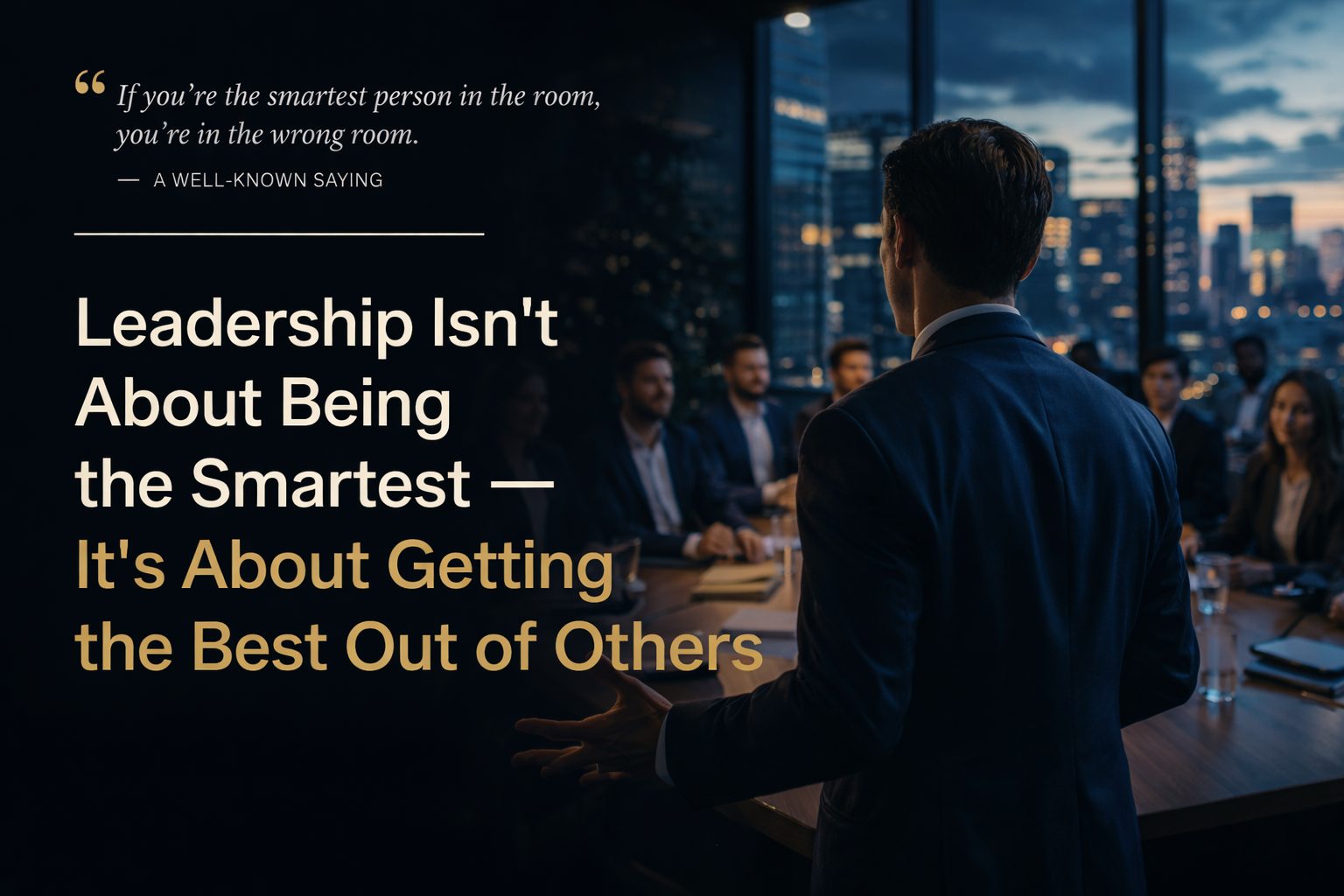
Leadership Isn’t About Being the Smartest Person in the Room.
Leadership is often framed as strategy, vision, and decision-making.
But in reality, leadership lives or dies on one variable: people.
Strategy, structure, capital, and technology all matter, but none of them deliver outcomes without people. And human behaviour is driven far more by emotion, trust, perception, and belief than by logic alone.
That is why understanding people, and leading with emotional intelligence (EQ), is often more decisive than raw intellect (IQ).
“Leadership is not about being right. It’s about being followed.”
Organisations Don’t Execute Strategy - People Do
You can design the most elegant strategy in the boardroom, but:
People decide whether to buy into it
People decide whether to go the extra mile
People decide whether to resist, comply, or champion change
A high-IQ leader may create a brilliant plan.
A high-EQ leader ensures it actually happens.
People Don’t Operate on Logic Alone
Traditional leadership thinking assumes people behave rationally.
In reality:
Decisions are influenced by fear, ego, identity, and trust
Change triggers uncertainty and resistance
Motivation is driven by meaning, recognition, and belonging
A leader who relies purely on logic will often be confused - “Why don’t they just get it?”
A leader with strong EQ understands - “They don’t need more information. They need confidence, clarity, and trust.”
“Execution is not a strategy problem. It’s a people problem.”
Trust Is the Ultimate Leadership Currency
People don’t follow titles. They follow leaders they trust.
Trust is built through:
Consistency
Authenticity
Empathy
Transparency
And trust determines everything:
Speed of execution
Quality of communication
Willingness to take risks
Cultural strength
High IQ might earn respect.
High EQ earns followership and trust.
Influence Is an EQ Skill, Not an IQ Skill
At senior levels, leadership becomes less about doing and more about influencing; Influencing Boards, Governments, Investors, Teams, Stakeholders with competing agendas.
And influence requires:
Reading the room
Understanding unspoken dynamics
Framing messages to resonate
Managing conflict without escalation
None of that is IQ-driven.
It’s EQ in action.
“IQ might get you to the leadership table. EQ determines whether anyone chooses to follow you once you’re there.”
Culture Is a Human System, Not a Policy Document
Culture isn’t what’s written.
It’s what people feel, tolerate, and reinforce.
Leaders shape culture through:
What they reward
What they ignore
How they respond under pressure
A technically brilliant leader with low EQ can:
Create fear-based environments
Silence dissent
Drive short-term performance at long-term cost
A high-EQ leader builds:
Psychological safety
Accountability with respect
Sustainable performance
The Leadership Multiplier Effect
Here’s the real distinction:
IQ drives your performance.
EQ multiplies everyone else’s.
And leadership is not about how smart you are.
It’s about how effective the people around you become because of you.
The best leaders don’t win because they’re the smartest person in the room.
They win because they get the best out of everyone else in the room.
“The best leaders are not the smartest in the room. They are the ones who make the room smarter.”